
Tariff Myth vs. Fact Sheet
Tariffs are often misunderstood. Here’s what the economic evidence actually shows.
MYTH
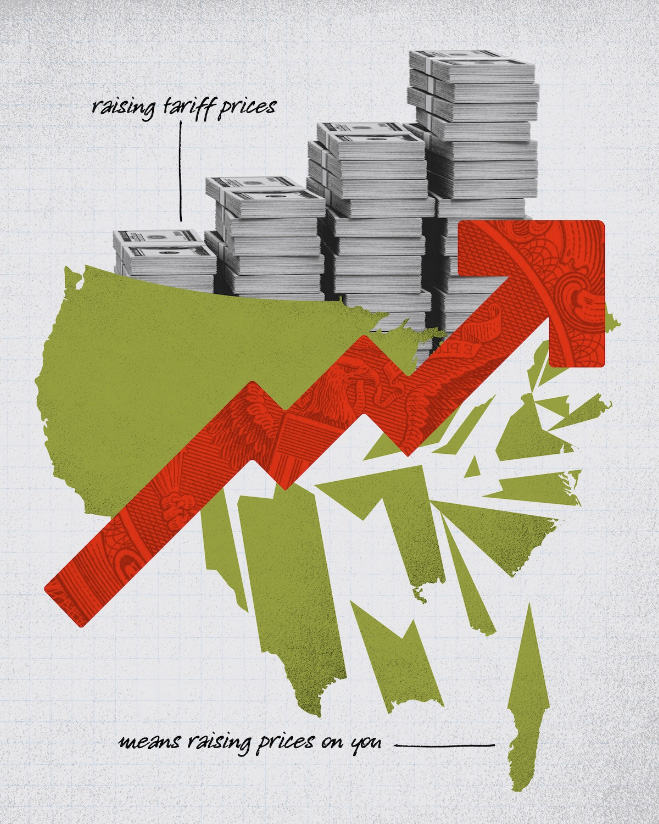
Tariffs don’t raise prices for Americans
FACT
U.S. importers pay tariffs at the border, and the costs are passed down to American businesses and consumers.
When an American business imports a product, they pay the tariff directly to U.S. Customs—not the foreign country. To recover these costs, businesses raise prices, and American consumers end up footing the bill. Small businesses, which make up 97% of importers, are hit especially hard since they can’t absorb the costs like large corporations can.
MYTH
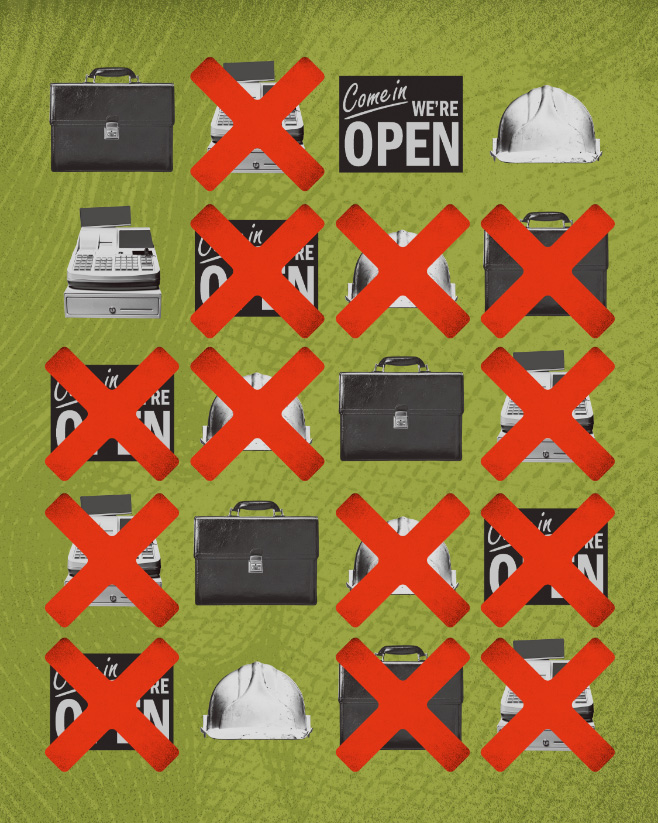
Tariffs save American jobs
FACT
They sometimes protect jobs in one sector, but destroy more in downstream industries and raise costs for everyone.
While tariffs may temporarily protect a few manufacturing jobs, they destroy far more jobs in retail, wholesale, and service industries that depend on affordable goods. Obama’s tire tariffs cost $926,000 per job saved while eliminating three retail jobs for every manufacturing job protected. Current projections show tariffs would cost between 955,000 and 3.4 million American jobs.
MYTH
Tariffs are just a short-term negotiating tactic with no real cost
FACT
Even "temporary" tariffs act as immediate taxes, disrupt supply chains, and invite retaliation.
Even short-term tariffs immediately raise prices for consumers and businesses, creating uncertainty that freezes hiring and expansion. Supply chains—which took years to recover from COVID-19—are fragile and can’t quickly adapt to sudden tariff changes. When other countries retaliate with their own tariffs, the damage compounds and can take years to reverse.
MYTH
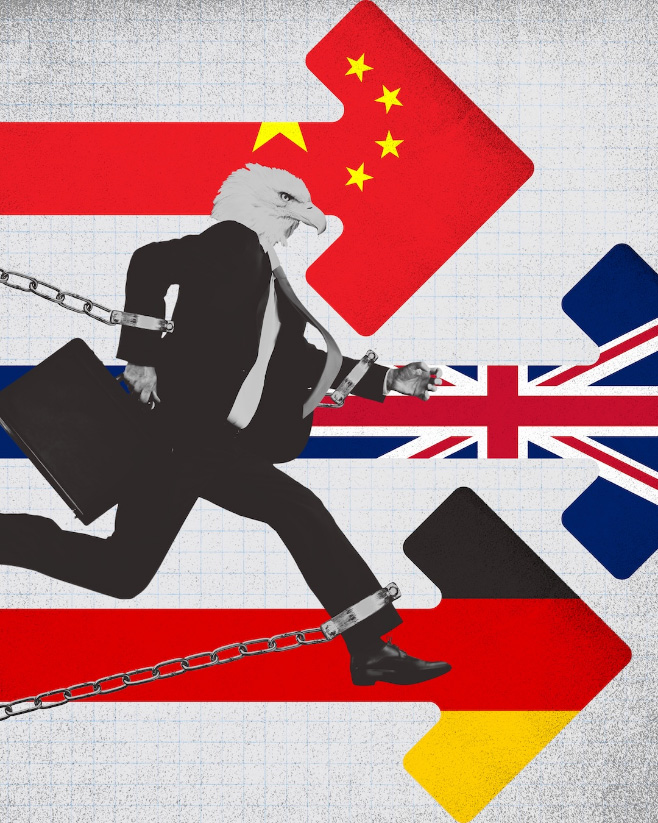
Tariffs make America stronger against foreign competitors
FACT
They raise input costs for U.S. manufacturers, shrink export markets through retaliation, and reduce overall competitiveness.
Tariffs make American manufacturers less competitive by raising their input costs while foreign retaliation blocks access to export markets. When countries respond to U.S. tariffs, American businesses lose opportunities to sell $2.1 trillion in manufactured goods overseas, allowing rivals like China to capture those markets instead. The result: weaker American competitiveness, not stronger.
MYTH
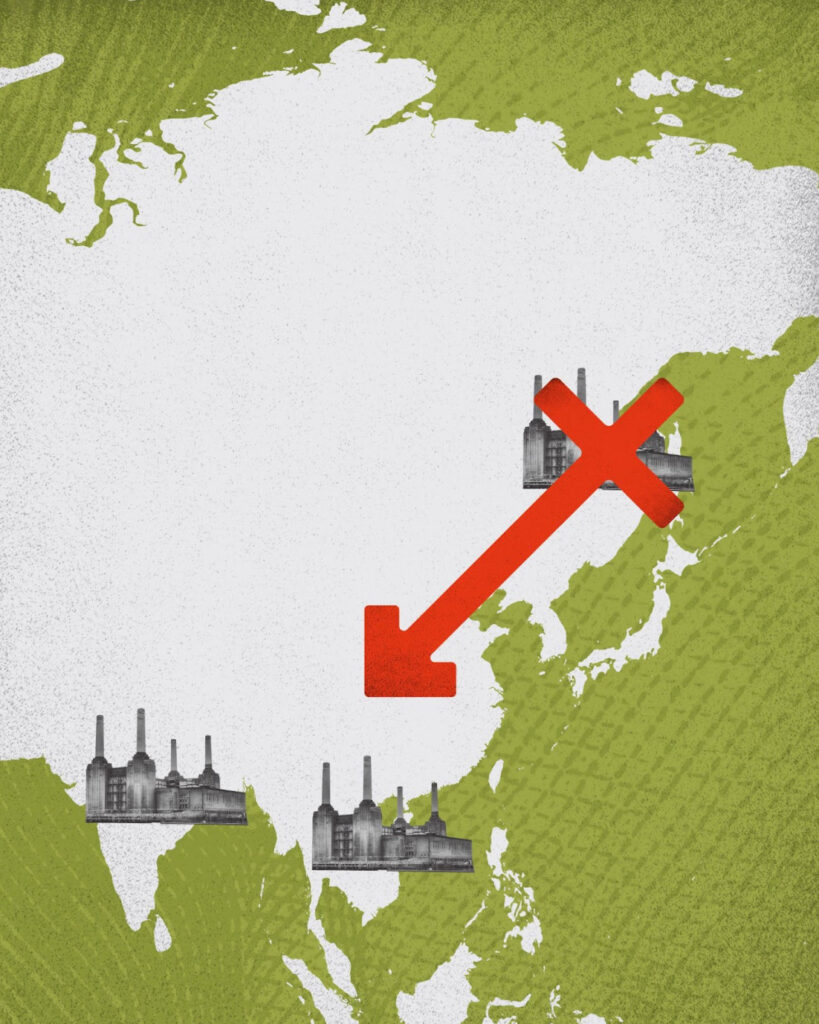
Tariffs reduce the trade deficit
FACT
Trade deficits reflect investment flows and consumer demand, not just imports. Tariffs don't reliably shrink them and often shift imports elsewhere instead.
America’s trade deficit reflects our economic strength—we’re wealthy enough to buy more than we sell. Tariffs don’t fix this; they often make it worse by raising production costs for American manufacturers, reducing what they can export. Meanwhile, imports just shift from one country to another, leaving the deficit unchanged while American businesses suffer higher costs.

Smoot-Hawley Tariff
The Great depression was worsened by retaliatory tariffs

The Context: When Herbert Hoover was sworn in as president in 1929, he made revitalizing the teetering farm economy a priority, calling Congress into a special session to make a “limited revision” to tariffs on agricultural imports. Congress instead raised industrial tariffs to unprecedented highs.
The Warning: At the time, a thousand economists signed a petition urging Hoover to veto the tariff, warning of its dire consequences for the American economy. Hoover, however, gave in to political pressure and signed the tariff into law on June 17, 1930. Even before he signed, other countries had already begun implementing retaliatory tariffs.
The Consequences: The results were catastrophic. According to U.S. Commerce Department data, American exports collapsed from $5.2 billion in 1929 to $1.7 billion by 1933—a 67% decline. Exports to Europe fell by two-thirds. Overall, world trade declined by 66% between 1929 and 1934. The U.S. economy contracted from $103 billion to $56 billion, and unemployment—which the tariff was supposed to reduce from 8%—instead skyrocketed to 25%.
The damage took years to undo. It wasn’t until 1934, when President Roosevelt signed the Reciprocal Trade Agreements Act, that the U.S. began reversing course. It took decades of trade liberalization to rebuild the international trading relationships that the Smoot-Hawley Tariff had destroyed.
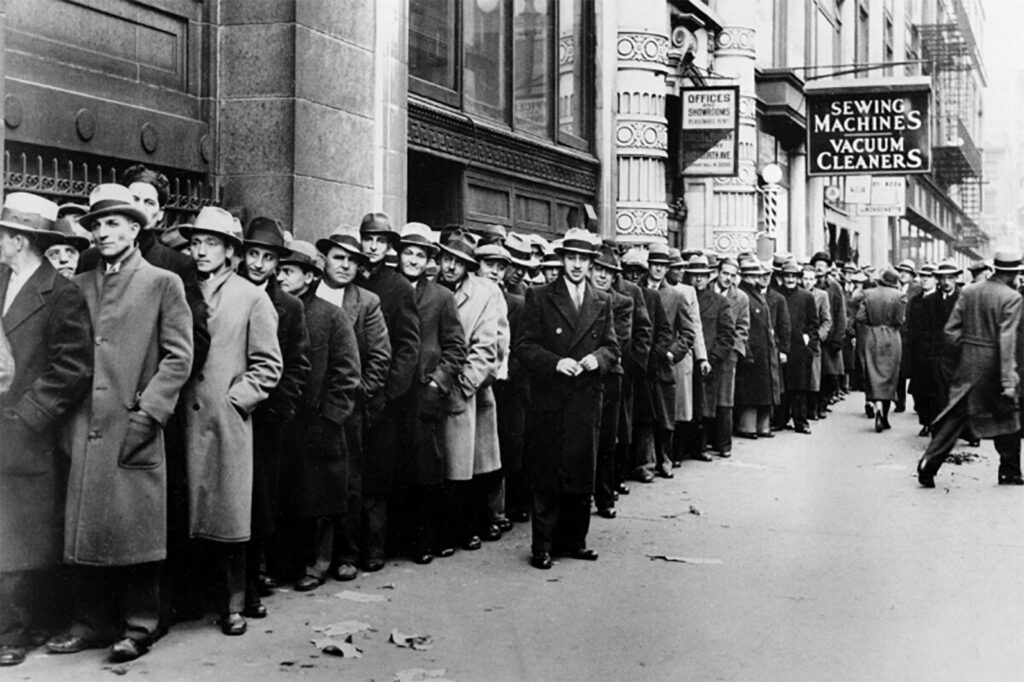
Nov. 24, 1933 | New York City | About 5,000 unemployed people wait outside the State Labor Bureau, which houses the State Temporary Employment Relief administration to register for 90,000 federal relief jobs during the Great Depression.

LBJ’s Chicken Tax
A “temporary” tariff that’s still costing Americans 60 years later
The Context: In the early 1960s, cheap American chicken flooded European markets, prompting France and West Germany to impose tariffs on U.S. poultry. President Lyndon Johnson retaliated in December 1963 with a 25% tariff on potato starch, brandy, dextrin, and light trucks.
The Real Story: The tariff had little to do with chicken. UAW president Walter Reuther wanted protection from Volkswagen competition; Johnson wanted union support for the Civil Rights Act and to avoid a strike before the 1964 election. Light trucks were included as a political favor to the auto workers’ union.
The Consequences: The tariffs on potato starch, brandy, and dextrin were eventually lifted. The 25% tariff on light trucks remains in effect today—60 years later. Harvard economist Robert Z. Lawrence contends the Chicken Tax “crippled the U.S. automobile industry by insulating it from real competition in light trucks for 40 years.” With foreign trucks priced out of the market, Detroit had little incentive to innovate on fuel efficiency or compete on price. A 2003 Cato Institute study called it “a policy in search of a rationale.”
The tariff has also produced absurd workarounds: Ford imported Transit Connect vans from Turkey as “passenger vehicles,” then had workers tear out the rear seats and windows before selling them as cargo vans. In 2024, Ford paid $365 million in penalties when the Justice Department caught on. What began as a backroom political deal became permanent protection that American consumers and businesses are still paying for today.

Bush’s Steel Tariffs
Short-lived tariffs that cost more jobs than they saved
The Context: In March 2002, President George W. Bush imposed tariffs of 8–30% on imports of more than 170 steel products, hoping to protect the struggling domestic steel industry. More than 30 steel makers had recently filed for bankruptcy, and the administration wanted to give the industry “breathing room” to restructure.
The Promise: Bush justified the tariffs as necessary to protect American steel jobs and give the industry time to become competitive again.
What Actually Happened: Steel prices spiked immediately—hot-rolled sheet prices rose 82% within months—creating shortages and putting American manufacturers at a cost disadvantage against foreign competitors. A study by economists Joseph Francois and Laura Baughman found the tariffs led to roughly 200,000 job losses in steel-consuming industries—more than the 187,500 workers employed by the entire U.S. steel industry at the time. The U.S. International Trade Commission found that nearly half of steel-using firms reported difficulty obtaining steel, and one-third reported production delays.
A 2025 peer-reviewed study in the American Economic Journal: Economic Policy confirmed these findings with rigorous econometric analysis: the tariffs “did not boost local steel employment but substantially depressed local employment in steel-consuming industries for many years after Bush removed them.” The damage persisted at least five years after the tariffs ended.
The Retaliation: The World Trade Organization ruled the tariffs illegal in November 2003, authorizing more than $2.2 billion in retaliatory sanctions—the largest penalty ever imposed by the WTO against a member state at that time. The European Union threatened tariffs on Florida oranges, Michigan cars, and other products, carefully targeting swing states. Bush backed down and withdrew the tariffs on December 4, 2003, just 21 months after imposing them.
Obama’s Tire Tariffs
Jobs saved vs. consumer costs and downstream job losses
The Context: President Obama imposed tariffs on tires imported from China—35% in the first year, 30% in the second, and 25% in the third—amidst intense political pressure from the United Steelworkers Union. Chinese tires were cheaper and had surged into the American market, hurting domestic tire manufacturers.
The Promise: Obama declared at the 2012 State of the Union that because of his tariff, “over a thousand Americans are working today because we stopped a surge in Chinese tires.”
What Actually Happened: If Obama’s tariffs saved any jobs, it wasn’t worth the cost. Economists at the Peterson Institute estimated the tariffs cost U.S. consumers $1.1 billion—more than $900,000 for every manufacturing job saved. Even worse, the U.S. lost roughly three retail jobs for every manufacturing job saved because of the tariff’s impact on Americans’ wallets. Americans had to spend more money on tires and less on other goods. On net, the tariffs cost the American economy around 2,500 jobs.
The Loophole: The tariffs didn’t even stop the flow of foreign tires into the U.S. market. Exporters in Thailand, Indonesia, and Mexico captured the market instead. Total U.S. tire imports actually increased overall.

Trump’s Tariffs
Broad steel, aluminum, and China tariffs; higher costs and retaliation
The Context: During his first term, President Trump imposed tariffs on steel (25%), aluminum (10%), and hundreds of billions of dollars worth of Chinese imports. The administration believed the tariffs would protect American manufacturing jobs and give the U.S. leverage in trade negotiations.
The Promise: Trump declared that “trade wars are good, and easy to win,” promising the tariffs would revitalize American manufacturing and bring jobs back from overseas.
What Actually Happened: The tariffs backfired. A study by economists at the Federal Reserve Bank of New York, Princeton, and Columbia found the tariffs cost U.S. companies and consumers $3 billion per month in additional taxes and caused $1.4 billion per month in deadweight losses—with almost all of the cost paid by Americans, not China. Federal Reserve Board economists found the steel tariffs led to 75,000 fewer manufacturing jobs, as the benefit to protected industries was “more than offset” by rising input costs and retaliatory tariffs. The Peterson Institute calculated that American consumers paid more than $900,000 a year for each steel job saved.
The Retaliation: As with Smoot-Hawley, America’s tariffs triggered retaliatory tariffs from trading partners. A study in the Quarterly Journal of Economics found that retaliatory tariffs resulted in a 9.9% decline in U.S. exports in targeted products—with farmers and blue-collar workers in Trump-supporting counties hit hardest. Deutsche Bank estimated the trade war cost investors $5 trillion in foregone stock market returns over 17 months.
$1,700
The Annual Cost Per American Household
Tariffs are a hidden tax on American families. The Yale Budget Lab—a nonpartisan research center—calculates that current 2025 tariffs cost the average household $1,700 per year in lost purchasing power. Low-income families are hit three times harder as a share of income: they lose 2.4% versus 0.8% for the wealthiest households. The biggest price spikes hit everyday goods—shoes and handbags up 22%, clothing up 21%, electronics up 17%, and new cars up 13% (roughly $6,500 more per vehicle).
97%
Of U.S. Importers Are Small Businesses
While headlines focus on multinational corporations, the vast majority of companies paying these taxes are small businesses with fewer than 500 employees. Unlike big-box retailers, these small importers lack the cash reserves to absorb massive tax hikes or the legal teams to negotiate special government exclusions. This creates a “David vs. Goliath” disadvantage where Main Street shops are crushed by costs that their larger competitors can often avoid or withstand.
490,000
American Jobs Lost in 2025
Tariffs are already costing American workers their jobs. The Yale Budget Lab estimates that payroll employment is 490,000 lower by the end of 2025 due to current tariff policies. The unemployment rate is projected to rise 0.3 percentage points this year and 0.6 percentage points by the end of 2026. While manufacturing expands modestly (3%), those gains are wiped out by losses in construction (-4%) and agriculture (-1.4%)—industries that rely on affordable materials and open export markets.
$200
Billion
Collected From American Businesses in 2025